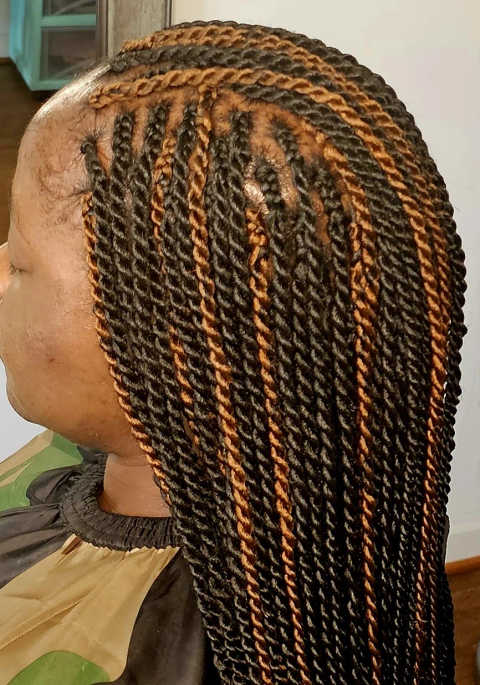
Senegalese Twists longevity: real timeline and how to reach 8 weeks
By Braiding Hair Max Baltimore | June 27, 2026

Our Senegalese Twists appointments are booked at 240 minutes, and the wear time is a separate conversation. In real life, Senegalese Twists typically last 4–10+ weeks. Most people in Baltimore land around 4–6 weeks with minimal upkeep, 6–8 weeks with consistent maintenance, and 8+ weeks only when the install is clean and your routine is steady. We’ll be honest with you about what’s realistic for your hair and lifestyle, because forcing twists to “last” can turn into frizz, slipping, or tension issues that aren’t worth it.
The 4–10+ week timeline (and what actually changes it in Baltimore)
If you want a clean answer to how long do Senegalese Twists last, here’s how we break it down in the chair.
4–6 weeks: You’re keeping it simple. You sleep protected most nights, you’re not overloading your scalp with product, and you’re not fighting humidity every day.
6–8 weeks: You’re doing basic maintenance on purpose. Light cleansing, gentle drying, consistent nighttime protection, and hands-off styling.
8–10+ weeks: This is the “max wear” lane. The install needs to be neat at the root, your hair tolerates extended protective styles, and you’re committed to frizz prevention and careful washing.
What changes the timeline fast is usually one of four things: root tension at install, how quickly your hair grows, how oily or dry your scalp runs, and how you handle sweat and water.
And yes, Baltimore summers matter. Heat and humidity make frizz show up earlier, especially around the hairline and crown. That doesn’t mean you can’t keep your twists looking good. It means you have to keep products light, keep your hands out of your hair, and use a silk or satin wrap consistently.
How to make Senegalese Twists last: our 8-week routine (simple, not fussy)
If your goal is Senegalese Twists maintenance that buys you extra weeks, your routine needs to protect the root area and keep buildup low. Here’s what we coach most people to do.
- Night protection every night: silk or satin scarf, bonnet, or pillowcase. This one habit does more for frizz prevention than any mousse.
- Keep your hands off the roots: constant rubbing at the scalp and hairline is where twists start looking “old” first.
- Moisture, but light: a little water-based spray on your natural hair and ends is usually enough. Heavy oils and creams can cause slipping and attract lint.
- Dry your twists fully after washing: damp roots plus humidity equals quick frizz and that sour scalp feeling no one wants.
- Choose low-friction styles: down styles and loose ponytails tend to keep the perimeter cleaner than tight buns every day.
Week-by-week: what we’d have you focus on
Weeks 1–2: Leave them alone as much as you can. Focus on scalp comfort, light moisture, and wrapping at night.
Weeks 3–4: This is when sweat, gym routines, and Baltimore humidity start showing. Clean your scalp gently and dry thoroughly.
Weeks 5–8: Protect the roots. If you’re seeing fuzz at the perimeter, a small refresh at the hairline can stretch your look without redoing the whole head.
Frizz at the roots, slipping, and fuzzy ends: why twists fade early
Most early breakdown comes down to a few fixable habits.
- Too much product at the scalp: it sounds moisturizing, but it often causes buildup, itching, and slipping. Keep it light and targeted.
- Aggressive washing: rough scrubbing makes frizz show up fast. We suggest gentle cleansing focused on the scalp, then let water run through the lengths.
- Leaving twists damp: air-drying is fine if it actually dries. If you’re headed out into Baltimore humidity with wet roots, frizz will win.
- Tension that’s too tight: tight doesn’t equal long-lasting. It can mean soreness, breakage, and wanting them out early.
If you’re already noticing frizz early, don’t panic and don’t drown it in gel. Let us know what week you’re in and what you’ve been using. A small routine change usually buys you time.
"My twists still looked neat weeks later, especially around the front."
One of our regulars
Rebook at 6–8 weeks: the sweet spot for a longevity check
If you want your Senegalese Twists to look good and your hair to stay happy underneath, we usually suggest a check-in around week 6 to week 8. That’s the point where new growth and frizz are visible, but you’re not fighting tangles at the root yet.
A longevity check is simple. We look at your perimeter, your parting, and your scalp condition. Then we’ll tell you straight if you should refresh a small section, ride it out another week or two, or plan your take-down and reinstall.
If you’re planning for an event or you’re already thinking about your next twist set, start with our Senegalese Twists aftercare guide, then bookmark our twists styling guide for Baltimore for low-friction styles that keep the roots cleaner.
Quick answers we give all the time about Senegalese Twists care
These are the questions we hear the most at Braiding Hair Max Baltimore, especially once the weather warms up and frizz prevention becomes a full-time job.